
Whoa!
Okay, quick confession — I’ve lost sleep over a single bad approve tx.
At first it felt like a dumb mistake; then it felt systemic.
Something felt off about how many wallets just slap “Approve” and move on, and my gut said we could do way better with simple simulation and smarter routing.
Seriously, I’m biased — but I’m also pragmatic, and this piece is about practical defenses you can actually use today.
Here’s the thing.
Transaction simulation is not magic, though it often looks like it.
Medium-length summaries usually miss the nuance.
Initially I thought simulation simply meant “dry run a transaction,” but then realized there’s a stack of components — callStatic checks, stateful bundle sims, mempool replays, and even external oracle manipulations — all of which change risk in non-obvious ways.
On one hand simulation can catch reverts and silly slippage, though actually it can’t predict every off-chain attack or every miner decision.
Hmm… let me be clear—simulation saves you from a lot of dumb losses.
Two quick examples from my own wallet history: one saved me from a reentrant revert during a marginal swap; another flagged a front-running risk on a complex aggregator route (I cancelled).
Those wins came because I treated simulation as the first line of defense, not the last.
If you add MEV-aware routing and a dose of manual risk assessment, your chances of walking away intact improve dramatically, though nothing is 100% safe in this space.
Also — and this bugs me — many people skip even basic preview screens (very very common).
Really?
Yeah.
Most UX designs bury the hard stuff.
Wallets that surface the simulation, gas breakdown, and pending allowance details let you make a conscious choice about trade-offs, which is huge for high-value trades where MEV risk scales with size.
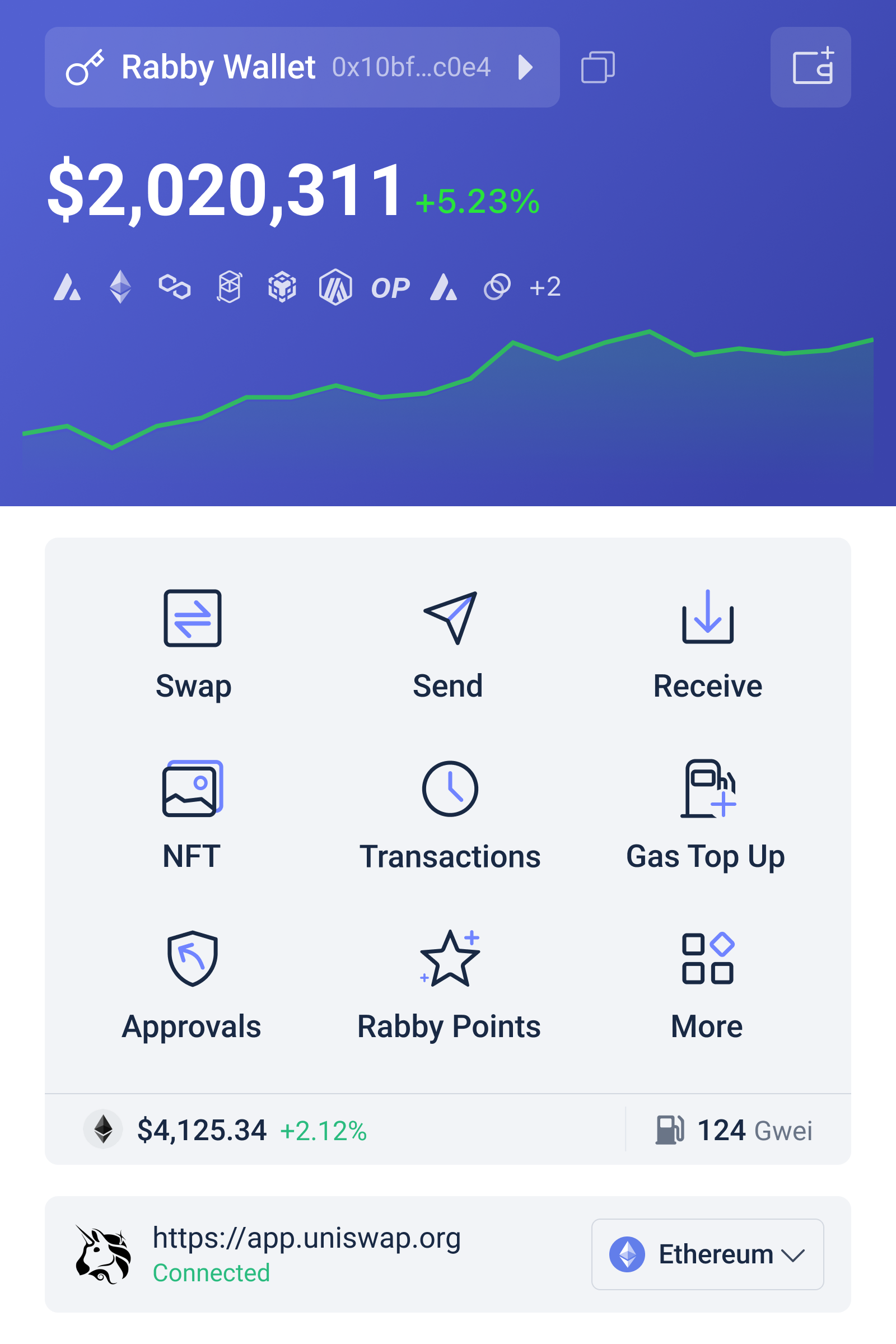
I use rabby because it foregrounds the simulation workflow in a way that reduces surprises for me (to my knowledge, YMMV).
Now let’s dig a little technical.
CallStatic is the simplest tool in your toolbox — it runs the transaction against the current chain state without committing.
It tells you if the tx will revert and can output return values that indicate slippage or logic gates.
But callStatic alone ignores mempool dynamics: a transaction that succeeds in callStatic can still fail or be front-run on-chain if a miner or bot manipulates ordering.
So the next layer is mempool replay and bundle simulation, which tries to model ordering and potential adversarial actions.
Whoa!
Bundle simulation is where Flashbots and private-relay ideas come in.
In theory, sending your transaction as a bundle to an MEV-aware relay can avoid being frontrun by bots watching the public mempool.
In practice, using relays adds complexity and sometimes cost, and you need to trust the relay to not leak your intentions.
On one hand it’s a great tool to mitigate sandwich attacks, though you also trade off some decentralization and introduce different trust assumptions.
I’m not selling relays as a panacea — they’re one instrument among many.
Something felt off about the “set-and-forget” approve pattern.
Approval risks are subtle: scope, duration, and allowances multiply exposure.
A narrow allowance for a single DEX contract, set to expire or reduced afterward, is often enough to cut a large exposure without killing UX.
I like wallets that simulate an approval action too — showing which contract will be authorized and what previous approvals exist — because it forces a micro-audit before you click.
If you don’t narrow approvals, you’re effectively insuring the next attacker for free.
Seriously?
Yes.
Small allowances matter.
Also, simulation tools can catch obvious scams like zero-decimal tokens or tokens with malicious transfer hooks, but they can’t catch oracle manipulation that happens off-chain.
So you should pair on-chain sims with a quick contract-read: is the token audited, what’s the token’s owner role, are there pause or mint functions?
That last part takes a little more effort, though it’s fast once you’ve got a checklist.
Okay, check this out—risk assessment is three-layered: transaction-level, contract-level, and systemic-level.
Transaction-level checks are slippage tolerance, gas math, and nonce expectations.
Contract-level checks include ownership privileges, audited history, verified source code, and tokenomics flags.
Systemic-level checks cover market depth, oracle decentralization, and known MEV vectors — these often require market intuition and external tools, and you can’t simulate them perfectly.
Hmm… my instinct said start simple, so: set slippage tight for predictable swaps, enable simulation by default, and test with small amounts.
But actually, wait—let me rephrase that: tight slippage reduces execution risk, yet for some routes you need relaxed slippage to get the best path, so balance is required.
On one hand, conservative settings reduce losses; on the other hand, they may prevent you from getting reasonable price improvements on complex aggregator routes.
So your strategy should adapt to trade size and the token pair’s liquidity, which is why simulation results must include a “confidence” indicator tied to observed orderbook depth.
Yes, that can be automated in wallets, and no, not enough wallets do it well.
Personal aside: I’m not 100% sure how every aggregator computes gas vs. slippage trade-offs, and honestly neither are most users.
That’s fine — but it’s why transparency matters.
If a wallet shows the exact route, the estimated gas per hop, and the simulated end state, you can make an informed call.
If it hides that, you’re basically trading blind.
(Oh, and by the way… UX that hides these details often claims “simplicity” while erasing control.)
Here’s what bugs me about typical MEV messaging: vendors promise protection but gloss over trust assumptions.
A private relay stops public mempool bots, but it introduces a relay trust vector.
Some MEV protection techniques reorder logic client-side to reduce front-running surface area, which is clever but can increase gas or fail in low-liquidity scenarios.
On balance, a hybrid approach—simulation + private relays for big trades + conservative allowances for approvals—feels practical and defensible for most DeFi users.
Not perfect, but it meaningfully reduces exposure.
Practical Checklist: What I Run Before Hitting Send
Whoa!
Short checklist, usable in a minute:
1) Run a callStatic simulation — does it revert?
2) Preview route and per-hop gas, check slippage impact.
3) Inspect contract owner/admin functions, and check approvals.
4) Consider a private relay or batch if trade is large.
5) Reduce allowance after a one-time spend (or use permit patterns).
Do those five and you cut many classically avoidable losses.
I’ll be honest — some of this is tedious.
But the alternative is unpredictable loss, which feels worse.
If you want to level-up without becoming a full-time auditor, pick a wallet that surfaces these steps natively and makes simulation obvious.
Rabby was the first wallet that made this workflow feel natural to me, so it’s part of my regular toolkit (again, YMMV).
Small choices add up.
FAQ
Q: Can simulation catch every attack?
No. Simulation is powerful for on-chain state checks and expected reverts, and it can model some mempool ordering with bundles, but it cannot fully predict off-chain oracle manipulation, chain reorganizations, or every adversary strategy. Treat it as a risk-reduction tool, not a crystal ball.
Q: When should I use a private relay or Flashbots?
Consider relays when your trade size is large relative to liquidity, or when you’re executing multi-step sequences that are attractive to sandwich bots. Remember that relays introduce a different trust assumption, so use them selectively and prefer audited, reputable services when possible.
Q: Are automated “set-and-forget” approvals ever okay?
For low-value, frequently used tokens they can be acceptable, but for large or one-off interactions you should prefer scoped allowances, permit mechanisms, or temporary approvals. The extra friction is worth the reduced systemic risk.